

Spotter 1
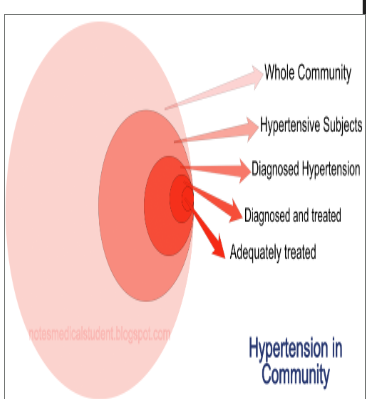
What is the significance of this diagram? (1)
Estimate hidden disease burden
Show need of screening programs & better access to care
Highlights gaps in health services
What is tracking in relation to hypertension? (1)
The tendency of individuals to maintain their relative position in blood pressure; children or adolescents with higher BP are more likely to become adults with hypertension.
Spotter 2
#Gemini said
Q1. Expand JNC-8 and mention its primary focus. (1)
Expansion: Eighth Joint National Committee on the Prevention, Detection, Evaluation, and Treatment of High Blood Pressure.
Significance: These guidelines provide evidence-based BP targets based on age, presence of Diabetes, or Chronic Kidney Disease (CKD). It emphasizes the use of specific first-line medications (ACE inhibitors, ARBs, CCBs, or Thiazides) alongside lifestyle modifications like sodium restriction and the DASH diet.
Q2. What is the DASH diet? (0.5)
Definition: Dietary Approaches to Stop Hypertension. It is a nutrition plan rich in fruits, vegetables, whole grains, and low-fat dairy, designed specifically to lower blood pressure without medication.
Q3. How much sodium is present in 5g of salt? (0.5)
Calculation: Standard table salt (NaCl) contains approximately 40% sodium by weight.
Result: 5 g (salt)×0.40=2 g of Sodium. (Note: This is roughly the maximum daily limit recommended by the WHO).
#Quick Facts for Viva/Spotting:
JNC-8 Thresholds: * General population ≥60 years: Target <150/90 mmHg.
General population <60 years: Target <140/90 mmHg.
Diabetes/CKD (all ages): Target <140/90 mmHg.
Sodium vs. Salt: Always clarify if a question asks for "Salt" (sodium chloride) or just "Sodium," as the numbers differ significantly.
Rule of Thumb: 1 teaspoon of salt≈5 g of salt≈2,300 mg of sodium.
##Spotter
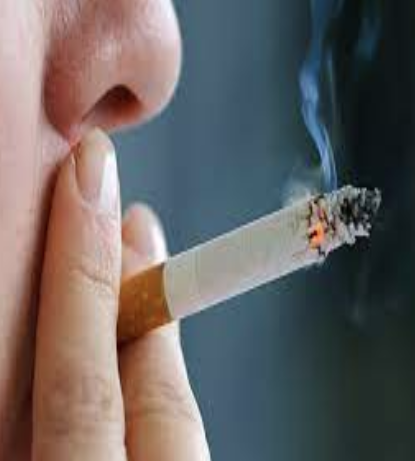
Q1. Cigarette smoking is a risk factor for which types of diseases? (0.5)
Non-Communicable Diseases (NCDs): It is a primary driver for Cardiovascular Diseases (CVD), Chronic Obstructive Pulmonary Disease (COPD), and various malignancies, most notably Lung Cancer.
Communicable Diseases: It also increases susceptibility to infections like Tuberculosis (TB) and pneumonia by impairing respiratory defense mechanisms.
Shutterstock
Q2. Define risk factors. (0.5)
Definition: A risk factor is any trait, characteristic, or environmental exposure that raises the likelihood of a person or a specific population developing a particular disease or injury.
Q3. Enlist two modifiable and two non-modifiable risk factors. (1)
Type | Examples |
Modifiable (Can be changed/controlled) | Tobacco use (smoking), excessive alcohol consumption, physical inactivity (sedentary lifestyle), and unhealthy diet (junk foods/high salt). |
Non-Modifiable (Cannot be changed) | Age, Biological Sex, Genetic makeup, and Family history. |
#Quick Facts for Viva/Spotting:
Modifiable Risk Factors: These are the primary targets for Primary Prevention strategies in community medicine.
Metabolic Risk Factors: A sub-category of modifiable factors including High Blood Pressure, Obesity (high BMI), Hyperglycemia, and Hyperlipidemia.
Synergistic Effect: Often, multiple risk factors (like smoking + hypertension) interact to multiply the total risk of a cardiovascular event rather than just adding to it

##Spotter
Q1. Enumerate any two primordial prevention strategies for COPD. (1)
Primordial prevention aims to avoid the emergence of risk factors in populations where they have not yet appeared.
Reducing Indoor Air Pollution: Promoting the use of smokeless chulhos (improved cookstoves) or switching to cleaner fuels (like LPG) to prevent exposure to biomass smoke.
Health Education: Educating school-going children and adolescents about the hazards of tobacco to prevent the initiation of the smoking habit.
Q2. Mention any four primary prevention measures for COPD. (1)
Primary prevention aims to reduce the incidence of disease by controlling specific causes and risk factors.
Smoking Cessation: Encouraging current smokers to quit and providing support through counseling or nicotine replacement therapy.
Occupational Hazard Control: Implementing measures to reduce exposure to industrial dust, vapors, and chemical fumes (e.g., better ventilation in factories).
Use of PPE: Ensuring workers in high-risk environments use appropriate respiratory protective equipment (masks/respirators).
Early Treatment of Respiratory Infections: Promptly managing acute respiratory tract infections in childhood and adulthood to prevent permanent lung damage.
#Quick Facts for Viva/Spotting:
Primordial vs. Primary: Remember, Primordial is about preventing the risk factor from existing (e.g., preventing the habit of smoking), while Primary is about managing the risk factor once it exists (e.g., quitting smoking).
Gold Standard Investigation: If asked for the diagnostic tool for COPD during a spotter, the answer is Spirometry (specifically FEV1/FVC < 0.70).
Secondary Prevention: This would include early diagnosis via screening and starting bronchodilators to prevent progression.